
The latest Sustainable Farming Incentive funding pot was allocated in under six hours, highlighting strong demand and renewed uncertainty for farmers.
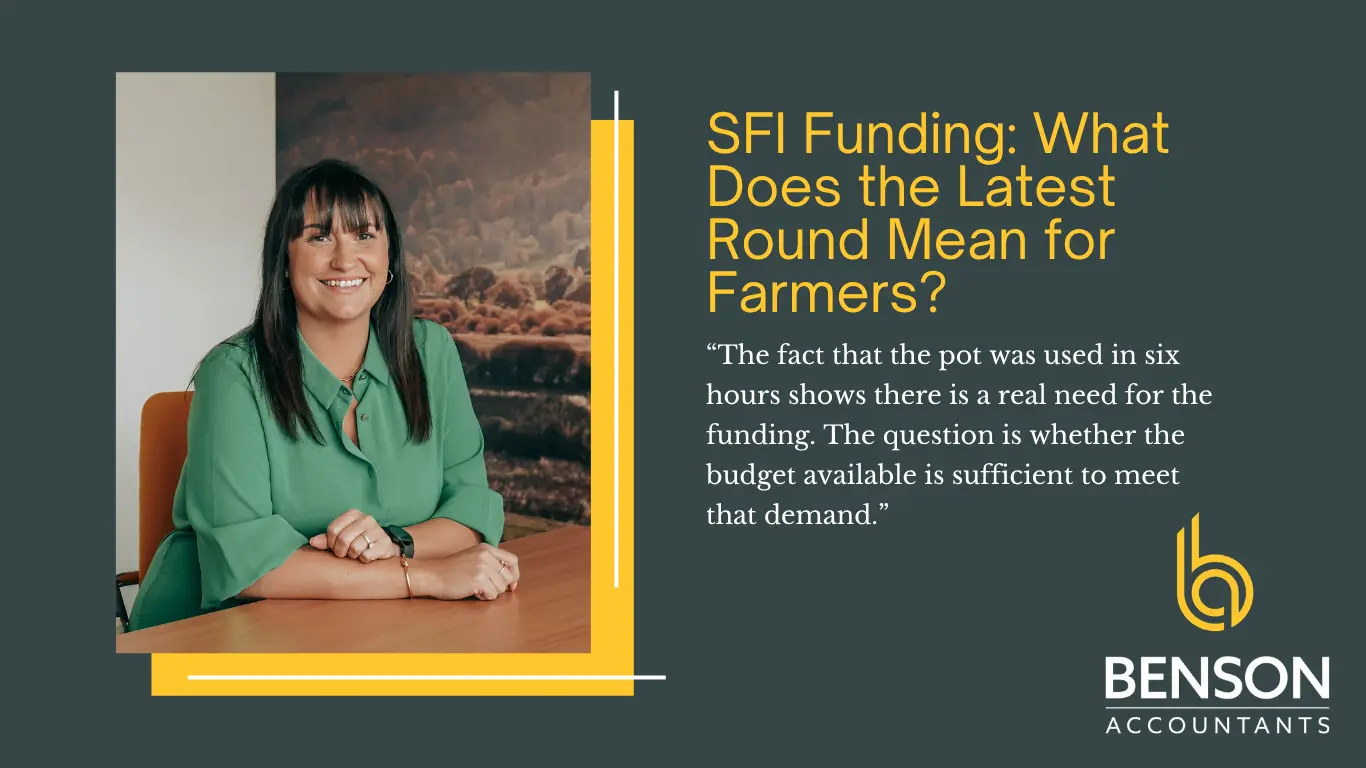
The latest Sustainable Farming Incentive funding pot was allocated in under six hours, highlighting strong demand and renewed uncertainty for farmers.
The latest round of the Sustainable Farming Incentive (SFI) has highlighted the demand from farmers for environmental funding, with the £233m funding pot fully allocated less than six hours after applications opened.
The scheme opened at 10am on Tuesday 22nd September, and had reached capacity by 3.48pm the same day, leaving thousands of farmers unable to secure funding.
For farming businesses already facing considerable changes to the support available to them, the speed at which the funding was allocated has raised further questions about the certainty of future support.
A vital source of support for farming businesses
For farmers who have previously taken up the SFI, the scheme has provided welcome support following the reduction and eventual end of BasicPayment Scheme (BPS) payments.
There had been significant interest in the latest SFIwindow, particularly now that BPS payments have stopped completely. However, the six-hour application window presented a very real practical challenge forfarmers.
“Six hours is unrealistic for some farming businesses,” says Sarah. “Farmers are out working during the day and may not get home until the evening. Some could be trying to complete an application at 10pm after a full day’s work.
The fact that the pot was used in six hours shows there is areal need for the funding. The question is whether the budget available issufficient to meet that demand.”
For farmers who were successful in securing an agreement, Sarah also highlights the importance of completing the next step.
If your application was successful, make sure you approve your agreement within 30 days, otherwise it may be withdrawn.
What if you missed out?
A further round of SFI funding is expected in 2027, but forsome farming businesses, waiting until then may create further uncertainty.
“Is 2027 too late for some farmers?” asks Sarah. “Smaller farms in particular will certainly feel the pinch first.”
For those who have missed out, it is therefore important to consider the wider farm business and what options may be available.
That could mean looking at diversification, changes to theway the farm is operated or other ways of improving the resilience of thebusiness. The right approach will be different for every farm, but the key is to consider the options available rather than wait for certainty on future funding.
“Farmers need the Government to support them, and they needa system that values the work they do. Most importantly, they need to know what support is available to them in the long term, rather than having to competefor funding through a six-hour window.”
Planning and cash flow in uncertain times
The uncertainty around future environmental payments also creates challenges when it comes to financial planning.
For farming businesses, cash-flow forecasting is already an important part of managing the ups and downs of agricultural income and expenditure. Where future support is uncertain, it becomes much harder to plan.
“The unknown makes cash flow and forecasting very difficult,” says Sarah. “How can you plan, expand or bring the next generation into the business if there is so much ambiguity around future funding?”
This is particularly relevant when farmers are considering significant investment decisions or longer-term succession planning.
Understanding the different scenarios and building flexibility into the farm business plan can therefore be valuable, particularly while the future funding landscape continues to develop.
What does this mean for tenant farmers?
Some tenant farmers are once again facing questions abouthow they can plan for the future.
“The move from subsidies based on ownership of the land, to who farms the land, was a welcome change for tenanted farms,” says Sarah. “Butonce again, they are back to square one with no certainty of support.”
For tenant farmers, decisions around environmental agreements also need to be considered alongside the terms and length of their tenancy, particularly where agreements involve longer-term land management commitments.
What Should Farmers Do Now?
The latest SFI funding window has brought the challenges of planning in an uncertain funding environment into sharp focus.
With further opportunities expected in 2027, farmers should keep up to date with announcements and consider how any future schemes could fit into their wider business plans.
For those who missed out on this round, there may also be value in using the time before the next funding opportunity to review the farm's financial position, consider investment and diversification options, and think about longer-term plans for the business.
Every farm is different, and decisions around funding, investment, diversification and succession need to be considered in the context of the individual business.
If you would like to discuss how changes to agricultural support could affect your farm business, speak to your usual Benson Accountants contact or get in touch with our team.
Sarah Chamberlain is an Associate at Benson Accountants, advising farming and rural businesses on their accounting, tax and wider business needs.


